Yoga Blocks and Straps: Cork vs Foam & What to Buy
Choose yoga blocks and straps with this beginner guide to cork vs foam, block sizes, strap lengths, and three useful product options.
As an Amazon Associate I earn from qualifying purchases.
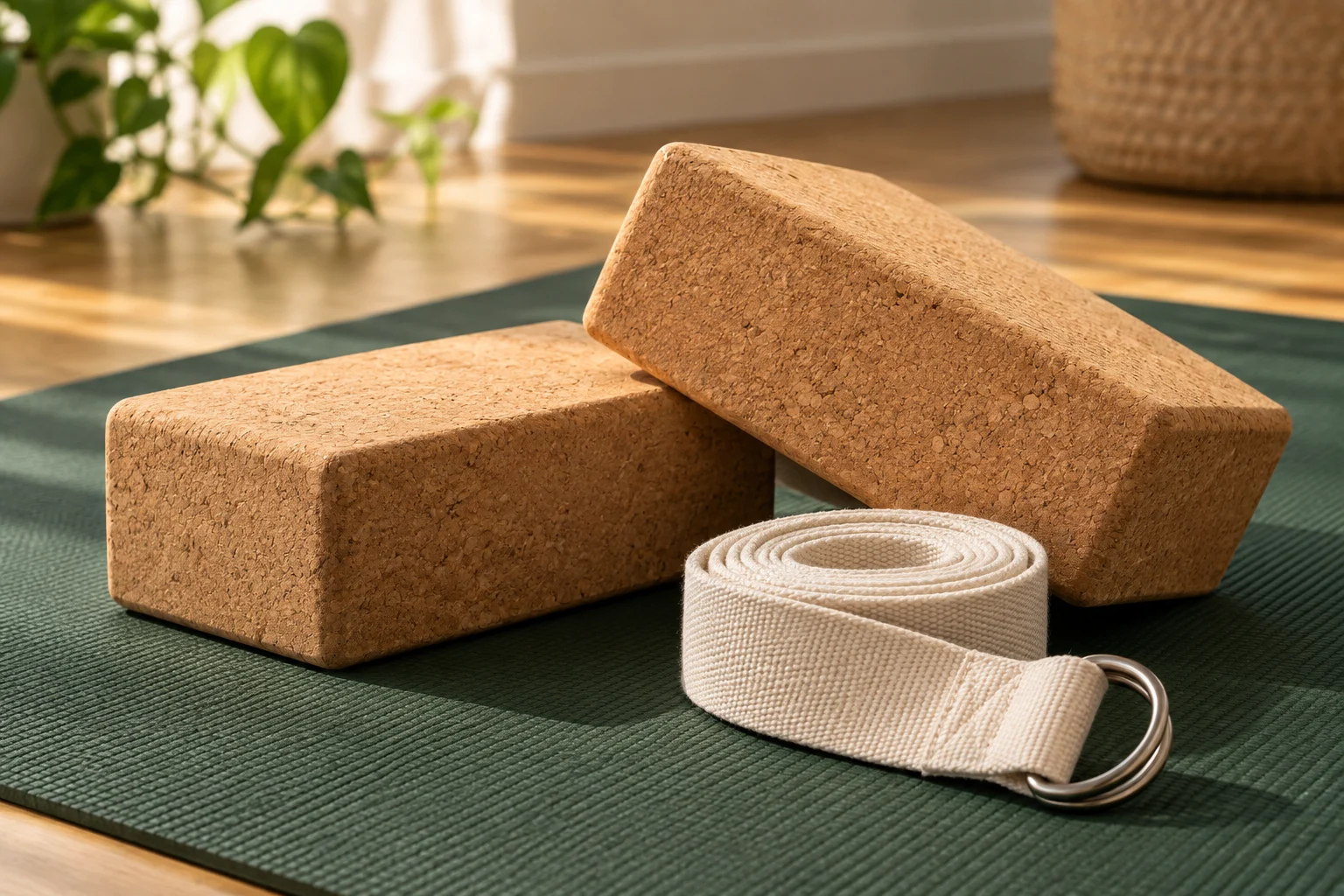
Yoga blocks and straps help you adapt a practice space without buying a room full of equipment. Blocks provide a raised surface, while a yoga strap offers an adjustable connection between your hands and another point of contact. Neither prop is a test of experience: the useful question is whether it makes your setup more comfortable and manageable.
This buying guide compares cork versus foam yoga blocks, explains strap features, and introduces three Amazon options to investigate. It is based on product information and practical selection criteria, not hands-on testing. Start with our yoga gear guides if you are still deciding which equipment belongs in your routine.
What yoga blocks can add to a beginner setup
A block changes the height of a support surface. Depending on its proportions, placing it on a different face gives you another height without changing products. This can be useful when the floor feels too far away for the setup you are trying to make.
However, a block does not make every position appropriate for every person. Start with a stable placement and follow instruction suited to your experience. Avoid treating the tallest orientation as a target you must progress beyond. The right height is the one that works for the situation.
If the surface beneath your props feels unstable, review your foundation first. Our guide to choosing a yoga mat explains why thickness, density, and floor conditions matter together. A solid block on a very soft surface can behave differently from the same block on a firm one.
Cork versus foam yoga blocks
Cork yoga blocks generally appeal to shoppers who want a firm feel and a substantial prop. Foam blocks often appeal to people who prefer something lighter or softer to handle. Those are useful starting points, but individual products vary enough that material alone should not decide the purchase.
Compare the dimensions, edges, weight, and manufacturer's description of density. If you can try both types at a studio, notice how they feel in your hands and how stable they seem on the surface you use. Your preference may depend on the role the block plays, rather than a universal judgment that one material is better.
How to choose yoga block dimensions
Product photos can make different blocks look nearly identical. Read the measurements and compare the height available on each face. A larger block may give you a broad contact area, while a smaller block may fit more easily into a studio bag or limited storage space.
You do not need to choose a prop by body height alone. Think about hand comfort, the support height you use, and how you intend to position it. If you already borrow a block in class, measure or identify that model to create a useful reference point for shopping.
One block or two: what should you buy?
A matching pair is practical when a setup places one hand on each side. It also lets you keep the same material and dimensions within reach. One block may still be enough if a teacher has shown you a specific use and you want to start with the minimum.
If you are buying your first props without a clear plan, a modest pair can be easier to live with than an oversized accessory collection. Do not buy a bulk pack merely because the unit price is lower. Storage and actual use matter more than collecting equipment that never leaves its packaging.
Stretching strap, resistance band, or mat carrier?
These products can look similar online, but they serve different purposes. A yoga stretching strap is usually designed as a non-elastic belt for adjustable reach. A resistance band stretches under tension. A mat carrier is primarily intended to hold or transport a rolled mat.
Read the intended use on the exact listing. Do not assume a carrying sling can safely substitute for every stretching strap, or that an elastic band behaves like a fixed-length belt. If you are following an instructor's sequence, use the type of equipment they describe or ask about an appropriate alternative.
This distinction also helps you avoid misleading bundle purchases. A “mat with strap” may mean a carrier is included, not a separate practice belt. Check the contents rather than adding a duplicate item or expecting a feature that is not actually supplied.
Choosing strap length, width, and buckle style
A longer yoga strap offers more spare length, but it can also leave more material to manage. Consider the intended setup and the amount of adjustment you need. If you can, compare available lengths with a strap you already use comfortably in class.
Width and texture influence how a belt feels in your hands. Look for edges and fabric that you expect to find comfortable, then inspect the buckle description. D-rings and other closures have their own threading instructions; a secure adjustment depends on using the closure as intended.
Do not use a strap to force a deeper position. A useful prop helps you find a manageable arrangement, not chase a dramatic photograph. If a position feels wrong, stop and ask for suitable guidance rather than increasing tension or assuming another purchase will solve it.
Gaiam Essentials foam blocks: a lightweight option to compare
The Gaiam Essentials set offers a foam-block option for shoppers who want matching props without choosing a heavier cork construction. Compare the exact set quantity and measurements on Amazon, because related listings may include single blocks or different packages.
Consider this style if portability and a softer hand feel are your priorities. The tradeoff to evaluate is firmness under the kind of support you intend to use. Do not read “foam” as a guarantee that every model will feel the same; check the selected listing and recent customer observations.
Trideer cork blocks: a firmer alternative
Trideer's cork block pair provides a useful comparison against foam. The linked listing identifies a two-pack of cork blocks, making it relevant for shoppers who want a matching set with a firm surface. Check the current dimensions and weight before buying.
This is a reasonable option to investigate when your props will mostly stay at home. If you travel with them, compare the carrying weight with your existing bag and mat. A material preference becomes more useful when you connect it to how the equipment fits into your actual week.
Tumaz yoga strap: compare the adjustable belt options
The Tumaz stretching strap listing offers a D-ring belt with different length options. It belongs on the comparison list for readers who want a dedicated practice strap rather than a mat-carrying sling. Select the length deliberately instead of assuming the default option is the right one.
Before buying, verify the buckle, width, fabric description, and cleaning guidance for the chosen variation. As with the blocks, this is a researched product suggestion rather than a personal durability test. Follow the instructions supplied with the item, including how to thread and adjust its closure.
A simple way to compare three product listings
Make a short note for each candidate: quantity, dimensions, material, weight, closure if applicable, and return terms. This separates genuinely useful differences from repeated promotional language. It also makes it easier to recognize when an apparently cheaper option is only one block rather than a pair.
Then read recent reviews for patterns connected to your priorities. Comments about portability are more useful to a commuter than a broad statement that an item is “perfect.” Ratings and purchase badges can help you identify established listings, but they cannot tell you whether the shape or feel is right for you.
Care, storage, and a less cluttered practice corner
Keep blocks where you can reach them without stepping over other equipment. Store straps loosely enough that you can inspect the fabric and buckle before use. Follow product-specific cleaning directions and let damp equipment dry before putting it into a closed bag.
If you also want a comfortable resting setup, read our restorative yoga essentials guide. Blocks, a bolster, and a blanket have different roles; you may need only one addition rather than all three. The essentials collection is another useful place to compare the functions before expanding your kit.
Frequently asked questions about yoga props
Are cork blocks better than foam blocks?
Not for every use. Cork generally offers a firmer feel, while foam often prioritizes lighter handling. Compare the exact dimensions, firmness, and carrying needs rather than choosing a winner based only on material.
Do beginners need a yoga strap?
A strap is optional. It becomes useful when it solves a particular reach or setup problem in an appropriately instructed practice. Borrowing one first can help you decide whether it belongs in your own kit.
Should I buy a block-and-strap bundle?
Only if each included item meets your needs. Check block quantity, strap length, and the intended function of the strap. A bundle is not automatically good value if one part will not be used.
Where should I start if I have no equipment?
Begin with a clear space and a suitable foundation. Read the yoga mat buying guide, then add props for a specific purpose. Our beginner practice section keeps the starting checklist simple.
Compare your options
Explore the gear
Researched options, not hands-on reviews. Check Amazon for the selected variation, current ratings, seller, price, and availability.
Gaiam Essentials Yoga Blocks, Set of 2
A foam pair to compare for lighter handling. Verify quantity, dimensions, and firmness for the selected variation before buying.
Trideer Cork Yoga Blocks, 2 Pack
A firm cork pair to compare with foam. Consider carrying weight and storage as well as the block dimensions.
Tumaz Yoga Stretching Strap
An adjustable D-ring practice belt with multiple length options. Confirm your chosen length and follow the buckle-threading instructions; this is not an elastic resistance band.
Explore more blocks and straps
Compare additional options on Amazon.