How to Choose a Yoga Mat: Thickness, Grip & Beginner Picks
Compare yoga mat thickness, grip, materials, and two practical Amazon options. Find a mat that fits your home practice and studio routine.
As an Amazon Associate I earn from qualifying purchases.
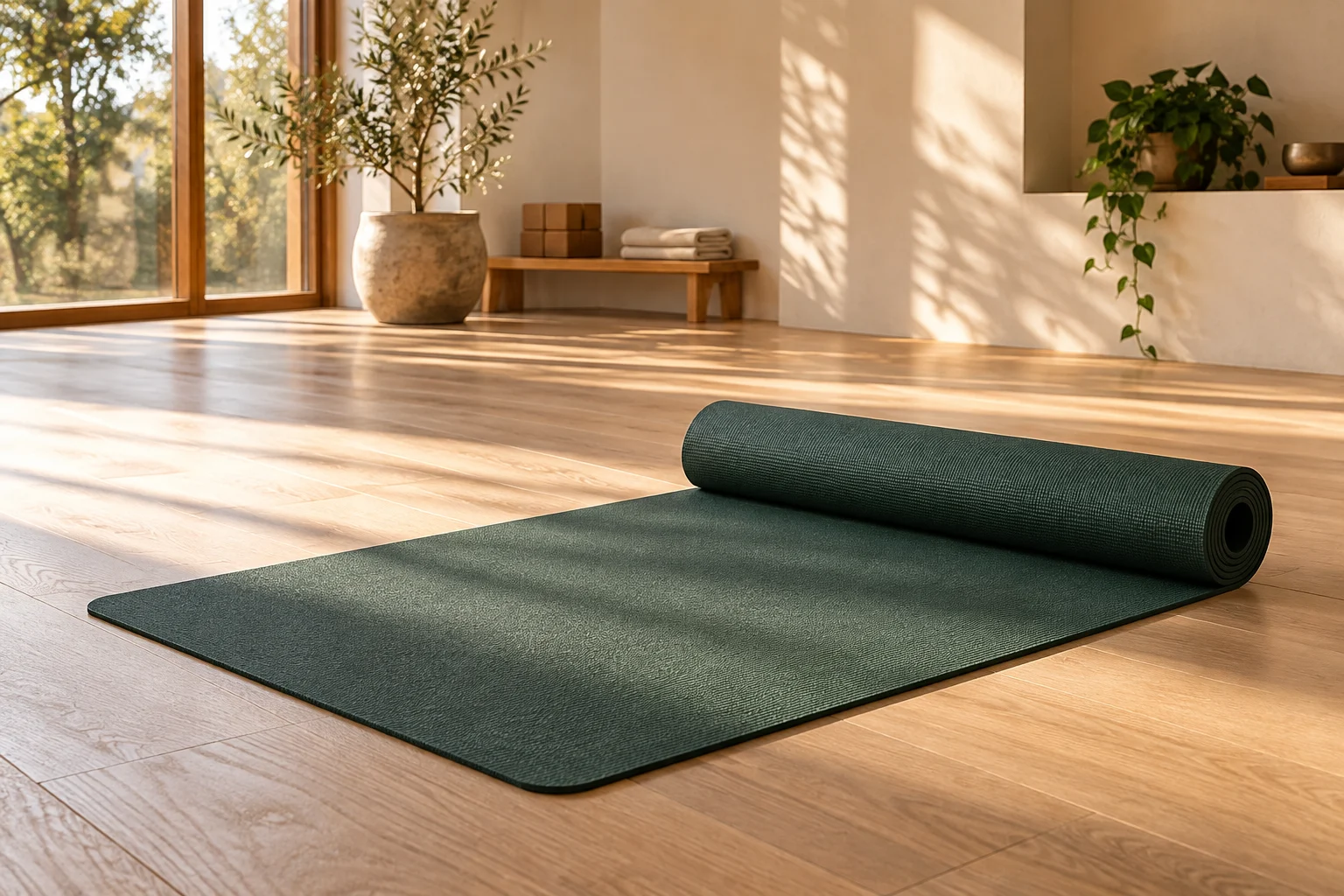
Choosing a yoga mat is easier when you begin with your practice rather than a bestseller badge. The best yoga mat for beginners is one that gives you enough room, feels steady on your floor, and is comfortable enough that you actually want to use it. A soft exercise mat and a dense studio mat can both be useful, but they solve different problems.
This guide explains yoga mat thickness, materials, grip, dimensions, and storage, then compares two specific options available through Amazon. It is a researched buying guide, not a claim of hands-on testing. For the rest of your setup, explore our yoga gear guides and practice essentials.
Start with the practice you actually do
Before comparing products, write down where you practice and what a typical session involves. Someone who takes standing flow classes has different priorities from someone who spends most of a home session seated or lying down. A traveler also needs to think about carrying weight rather than looking only at cushioning.
For a mixed home routine, put stability, usable space, and easy care near the top of your list. For slower floor work, comfort may matter more. If you regularly attend a class, ask whether you can try the studio's mats before buying. A few minutes on a real surface often clarifies preferences that product photos cannot show.
Yoga mat thickness: cushioning versus stability
Thickness describes how tall a mat is, not how supportive it feels. Two mats with the same measurement can compress differently because their materials and construction differ. A dense mat may feel relatively firm while a softer mat allows your hands or feet to sink farther into it.
If your shopping list says “thick yoga mat,” ask what you want the extra thickness to accomplish. More padding may feel pleasant during floor exercises, but a very soft surface can feel less steady during standing balance work. Do not assume that the thickest mat is automatically the most versatile choice.
When possible, compare how the mat feels under both a flat hand and a standing foot. Also consider the floor underneath it. A firm, level surface is a different starting point from deep carpet. Equipment should fit the whole setup, not just one isolated specification.
Understand the material before choosing
Yoga mats are sold in several materials, including PVC, natural rubber, TPE, and different foams. Rather than treating one material label as a universal quality score, look at the complete product: density, texture, care requirements, weight, and the manufacturer's stated use.
If material sensitivities matter to you, read the exact listing and packaging instead of assuming every mat from a brand is made alike. Likewise, a broad “eco” description does not explain manufacturing, service life, or disposal. Look for specific, verifiable information rather than choosing on a marketing term alone.
Ask how much maintenance you are willing to do. A mat that needs a particular cleaning method may still be a good purchase, but it should match your routine. Store the care instructions somewhere convenient so you do not have to guess later.
What does a non-slip yoga mat really mean?
A non-slip description does not guarantee identical grip in every situation. Hands, moisture, floor finish, cleaning residue, and wear can all affect how a surface feels. A mat that suits dry home practice may not feel the same during a sweaty session.
Read the manufacturer's guidance about first use and cleaning. Some surfaces change with use, and certain products are intended to be paired with a towel for particular conditions. Check that any towel you add is suitable for the mat rather than treating an ordinary loose towel as a universal fix.
If your existing mat is sliding, inspect both sides and the floor before buying another. Remove dust, check for moisture, and follow the care instructions. Persistent instability is a reason to reassess the setup, not to force your way through a session.
Measure length, width, and the room around you
Look beyond the mat's color and compare its actual dimensions. A longer mat can be helpful if you regularly find your head or feet extending beyond the ends. Additional width can feel welcome, but it also takes more room in a small apartment or crowded class.
Measure the clear floor area where you intend to practice. Leave space around the mat for comfortable movement and a route to step off it. Doors, furniture corners, and nearby shelves matter as much as the rectangle printed on a product listing.
For travel, measure the rolled mat too. Your bag, closet shelf, or carrying strap must accommodate that size. The blocks and straps guide explains why a mat carrier and a stretching strap should not be confused when you choose accessories.
Manduka PROlite: consider it for a firmer practice surface
The Manduka PROlite listing describes a 4.7 mm mat with dense cushioning and a closed-cell surface. It is worth comparing if you prefer a relatively firm foundation and want a mat that can move between home and studio. The listing also explains that its surface grip develops with use.
The tradeoff is that a dense studio-style mat will not feel like a plush exercise pad. Check the selected size, carrying weight, care instructions, seller, and return terms before ordering. Choose it for the characteristics you want, not because a premium name makes it automatically right for every beginner.
Gaiam thick mat: consider it for cushioning-focused floor work
The Gaiam Essentials thick mat listing describes 10 mm NBR foam and a 72-by-24-inch format, with a carrying strap. This makes it a useful comparison for shoppers who prioritize a softer-feeling surface for controlled floor exercise or a simple home setup.
The practical question is whether that softness suits your balance work as well. Compare it with a denser option if standing poses are a large part of your routine. Confirm the dimensions and included accessories for the particular variation you select; photos and options can differ within one product listing.
Compare total ownership, not just the purchase price
A useful mat budget includes more than the initial price. Think about whether you need a carrier, where the mat will dry, and whether the recommended cleaning approach is convenient. An inexpensive purchase becomes less useful if it is awkward to store or unpleasant to carry.
Avoid buying a complete accessory bundle just because it appears to save money. First decide whether the mat itself meets your needs. Then add equipment for a clear reason. Our restorative yoga essentials guide can help if your next purchase is a bolster or blanket rather than another mat.
Read Amazon ratings with the right questions
Ratings are a starting point, not a substitute for checking the product. Read recent comments about the exact size or variation you want. Look for repeated observations about texture, storage, cleaning, and durability rather than reacting to one unusually enthusiastic or disappointed review.
A recent-purchase badge can indicate interest, but it does not tell you whether buyers have your priorities. Review totals may also combine variations. Check the seller and fulfillment information, especially when several offers appear under the same listing. Current ratings, stock, and prices should always be confirmed on Amazon before purchase.
Build a practical first-week setup
Once your mat arrives, confirm that the item and size match your order. Follow its first-use instructions and inspect it on the floor where you plan to practice. Keep packaging until you have checked the return conditions and decided whether the surface works for you.
Place only the props you need nearby. A pair of blocks can be more useful than a second mat if your main challenge is reaching a comfortable support height. Keep water and belongings outside your movement area, and make the setup easy to put away. A convenient routine is often more sustainable than an elaborate room arrangement.
Frequently asked questions about choosing a yoga mat
Is a thicker yoga mat always better?
No. Thickness is one part of comfort, and softness can affect stability. Compare the material and your intended practice as well as the measurement. Choose the surface that feels appropriate for how you move.
Do I need an expensive yoga mat as a beginner?
Not necessarily. A clear match between your needs and the mat matters more than a premium label. Start with a realistic budget and the features you will use, then compare care requirements and return options.
Can I use the same mat for home and studio?
Often you can, provided the mat suits both settings and is practical to carry. Check your studio's requirements, your storage space, and whether the weight is comfortable for your commute.
What should I buy after a mat?
Identify the missing function first. For adjustable support, read about yoga blocks and straps. For a quieter floor-based setup, compare bolsters and blankets. You can also return to Start your practice for a simpler starting point.
Your final yoga mat checklist
Before ordering, confirm the material, dimensions, thickness, weight, care method, seller, and return terms. Decide whether you want a firmer foundation or a softer floor-exercise surface. That short checklist is more useful than chasing the most popular color or the largest review count.
Compare your options
Explore the gear
Researched options, not hands-on reviews. Check Amazon for the selected variation, current ratings, seller, price, and availability.
Manduka PROlite Yoga Mat
For shoppers comparing a dense 4.7 mm practice surface. Check the selected dimensions, care instructions, and break-in guidance; it will feel different from plush exercise foam.
Gaiam Essentials Thick Yoga Mat
For cushioning-focused floor exercise. The linked 10 mm NBR option is 72 by 24 inches and includes a carrier. Consider a firmer mat if balance work is your priority.
Explore more yoga mats
Compare additional options on Amazon.